Talks and forums from The Invisible Playground
For parents, students, and school communities
Age-specific sessions that help families understand the systems shaping attention, identity, judgment, and agency.
Screens are a part of everyday life. They are also environments designed to capture attention, shape behavior, amplify social pressure, and bring kids back again.
These talks and forums help families and schools understand those systems in plain language, then build usable habits of awareness, recovery, judgment, and self-direction.
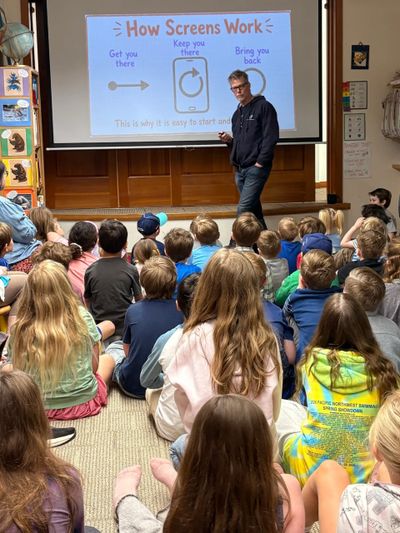
Speaking Experience

From technology stages to school communities.
Gary Gattis has spoken at SXSW, GDC Online, MacWorld, Casual Connect, the Mensa Foundation Colloquium, PAX, school forums, and parent education events on topics ranging from game design, free-to-play economics, mobile esports, and company culture to children, screens, attention, AI, and self-direction.
Student forums
For elementary, middle, and high school students.
Student sessions help kids see how apps, games, feeds, group chats, and AI systems ask for their attention and shape what feels normal. The result is that kids notice more clearly, pause more often, and make choices that are more their own.
Younger students receive playful, visual language for screen pull and “tricksters.” Older students engage more directly with attention, social pressure, identity, AI, authorship, and judgment.

Parent talks
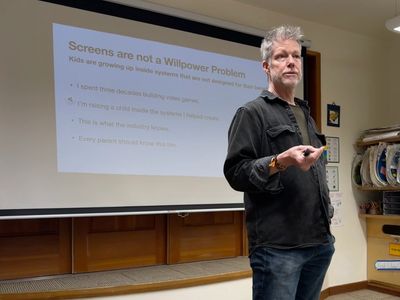
For parents, caregivers, educators, PTOs, and school communities.
Parent talks help adults understand the systems shaping children’s attention, behavior, mood, identity, and judgment. Each session translates complex design and technology patterns into family language and simple next steps.
Parents leave with:
- A clearer framework for understanding what kids are up against
- Better language for talking with children about screens
- Concrete strategies for transitions, recovery, and self-direction
- Companion tools or guides they can use at home
Elementary School | K–5 | Available now
K-5 Parent Talk
K-5 Student Talk
K-5 Student Talk

A parent talk that helps K-5 families understand how screens are designed to pull kids in, and how simple daily practices can build healthier stopping, recovery, and self-direction.
- How the attention economy works, in plain language
- Why stopping feels hard for kids and adults
- Actionable strategies for smoother screen transitions
- How small shifts can build attention, recovery, and self-direction
K-5 Student Talk
K-5 Student Talk
K-5 Student Talk
A kid-facing talk that helps K–5 students spot the screen tricks designed to pull their attention, so they can set the stop, spot the hook, avoid the bait, and own their attention.
- How screens try to get, keep, and bring back attention
- Why “just one more” can feel so powerful
- How to notice screen tricks before getting pulled in
- How to stop, recover, and choose what deserves attention
Middle School | Grade 5–8 | Available now
Middle School Parent Talk
Middle School Student Talk
Middle School Student Talk
A practical guide for parents to help middle schoolers recognize how apps, games, feeds, and group chats shape attention, mood, belonging, and identity, and use that awareness to build better judgment online.
- Why middle school screen life feels different
- How games, feeds, and group chats shape attention and mood
- Why belonging and comparison become more powerful
- How to support recovery, boundaries, and growing self-direction
Middle School Student Talk
Middle School Student Talk
Middle School Student Talk
A middle school talk that helps students understand how games, feeds, phones, and group chats pull on attention, mood, belonging, and identity, so they can build better judgment and more self-direction online.
- How platforms shape what feels urgent, important, or normal
- How group chats and social feedback create pressure
- Why comparison can distort identity
- How to notice the effect before choosing the response